Author: Michael Nelson

Automation, industrial business process workflow optimisation stock photo

I Built a Second Business — Here’s Why (and What It Means for You)

If you’ve been following Five Towers Media for a while, you probably know that I’m not someone who sits still.

We’ve spent the last several years helping small and mid-size businesses across the Capital Region build audiences, tell their stories, and grow. But somewhere along the way, I kept running into the same problem — one that marketing alone couldn’t fix.

The businesses we work with are busy. Not “we need more leads” busy. Deep-in-the-weeds, can’t-come-up-for-air busy. Invoicing done by hand. Follow-ups falling through the cracks. Reports assembled from six different spreadsheets every month. Work that people were doing because it had to get done — not because it was the best use of their time or talent.

That’s the problem Foundry 5 is built to solve.

What Is Foundry 5?

Foundry 5 is a Saratoga Springs-based business automation company built for small businesses ready to work smarter. The work is straightforward: we identify one manual process that’s costing a small business time, money, or people — scope it exactly — and automate it end-to-end. Fixed scope. Fixed price. Done in two to three weeks.

The kinds of workflows we’re talking about include things like:

  • Invoicing and payment follow-up that currently lives in someone’s inbox
  • Lead intake that requires a person to copy data from a form into a CRM
  • Client onboarding steps that happen manually every single time
  • Reports pulled together by hand from multiple systems each month

Once an automation is built, it runs on Foundry 5’s managed infrastructure. Clients don’t touch servers or tools. Optional care plans keep everything monitored and maintained — with SLA-backed response times depending on the tier.

Why Now?

Until pretty recently, sophisticated workflow automation was an enterprise play. The tools were complex, the costs were high, and you needed a dedicated IT team to make it work. That’s changed significantly in the last few years. A new generation of automation platforms has made it possible to build reliable, powerful automations for a fraction of what it would have cost before.

Small businesses deserve access to the same operational leverage that larger companies have always had. That’s the window Foundry 5 is stepping through.

How the Two Businesses Connect

Five Towers Media and Foundry 5 are separate companies with separate teams, but the mission is the same: help small businesses grow and give them real support as they do.

The way I see it — marketing helps you grow your audience. Automation helps you build the operational foundation to actually handle that growth. One without the other leaves gaps. Together, they’re a much more complete picture of what it takes to run a business well at scale.

I’ll continue leading Five Towers Media. Foundry 5 has its own engineer and its own delivery model — so nothing changes about the work we do together here.

If You Know Someone Who Needs This…

If you work with a business that’s drowning in manual work — or if that business is yours — I’d love to have a conversation.

You can learn more at foundry5.us, or reach out to me directly at michael@fivetowers.us. No hard sell. Just a conversation about what’s actually slowing things down.


  • What does Foundry 5 do?

    Foundry 5 is a Saratoga Springs business automation company that helps small businesses identify, scope, and automate the manual workflows slowing them down — things like invoicing, lead follow-up, client onboarding, and monthly reporting. Projects are fixed-scope and fixed-price, typically completed in two to three weeks.

  • Where is Foundry 5 located?

    Foundry 5 is based in Saratoga Springs, New York, and serves small businesses across the Capital Region.

  • How much does business automation cost?

    Foundry 5 projects are fixed-price, ranging from $3,500 to $10,000 depending on complexity. Optional monthly care plans start at $350/month and cover ongoing monitoring, maintenance, and support.

Recent News

See All News

Continue reading

A Simple Strategy to Make Your Marketing More Effective

If you’ve ever felt stuck wondering what to post, what to say in a video, or how to stay consistent with your marketing, you’re not alone.

Many business owners understand they need to create content, but uncertainty about what to talk about often creates more hesitation than the act of recording itself.

That’s why we recently introduced a simple framework in an article for Buying Local. Read the full article here: Five Minutes to 10x Your Marketing

The Real Challenge Behind Content

For most businesses, the issue isn’t a lack of effort. It’s a lack of clarity. When your message isn’t clearly defined, marketing feels scattered and inconsistent. Content becomes reactive instead of strategic, and videos either don’t get recorded or fail to gain traction.

In the Buying Local article, we outline a practical approach built around one focused, five-minute video each month. More importantly, we explain how to determine what the video should actually cover so it strengthens your positioning rather than adding more noise.

A Different Way to Think About Marketing

The article explores a shift in how to think about marketing altogether. Instead of beginning with your company, services, or accomplishments, it encourages starting somewhere else. That change in perspective simplifies your messaging and makes it far easier to decide what topics deserve your attention.

Once you understand that shift, choosing what to talk about each month becomes clearer and more strategic.

Need Help?

If you’d like the full breakdown of the “Five Minutes to 10x Your Marketing” strategy, including how to structure your message and avoid common mistakes, you can read the complete article on Buying Local here: 5 Minutes to 10x Your Marketing: What Should You Talk About?

Check out our free video guide and learn how to create consistent, problem-focused content: fivetowers.us/what-should-you-talk-about/

Recent News

See All News

Continue reading

How to Turn 5 Minutes of Video Into Months of Marketing Content

One of the biggest frustrations we hear from business owners is this:

I know I should be marketing more, but I don’t have the time—or the energy—to keep up with it.

That frustration is understandable. Most businesses approach marketing as a series of disconnected tasks: social media posts, email campaigns, blog writing, videos, SEO—all treated as separate projects requiring separate ideas.

That approach almost always leads to burnout.

The better approach is integration, not volume.

Recently, we broke down a simple system that shows how a single five-minute video can fuel weeks—or even months—of marketing across every channel you already use. That full article is being published on buyinglocal.us, and it’s designed specifically for small and locally owned businesses.

Below is a high-level overview, along with a link to the full article.


The Core Idea: One Piece of Content, Everywhere

Instead of creating new content for every platform, the goal is to create one strong piece of content and adapt it for multiple uses.

The easiest starting point is a short video recorded on your phone.

It doesn’t need to be polished or scripted. It just needs to answer a real question your customers have—ideally one you already answer regularly in person.

That five-minute video becomes the foundation for everything else.

How One Video Turns Into Multiple Assets

From a single recording, you can create:

  • Short video clips for social media
  • A written transcript of the video
  • A blog post generated from that transcript using AI tools like ChatGPT
  • An email campaign using the blog content
  • Social posts that link back to the blog

You’re not creating more work—you’re reusing the same idea in smarter ways.

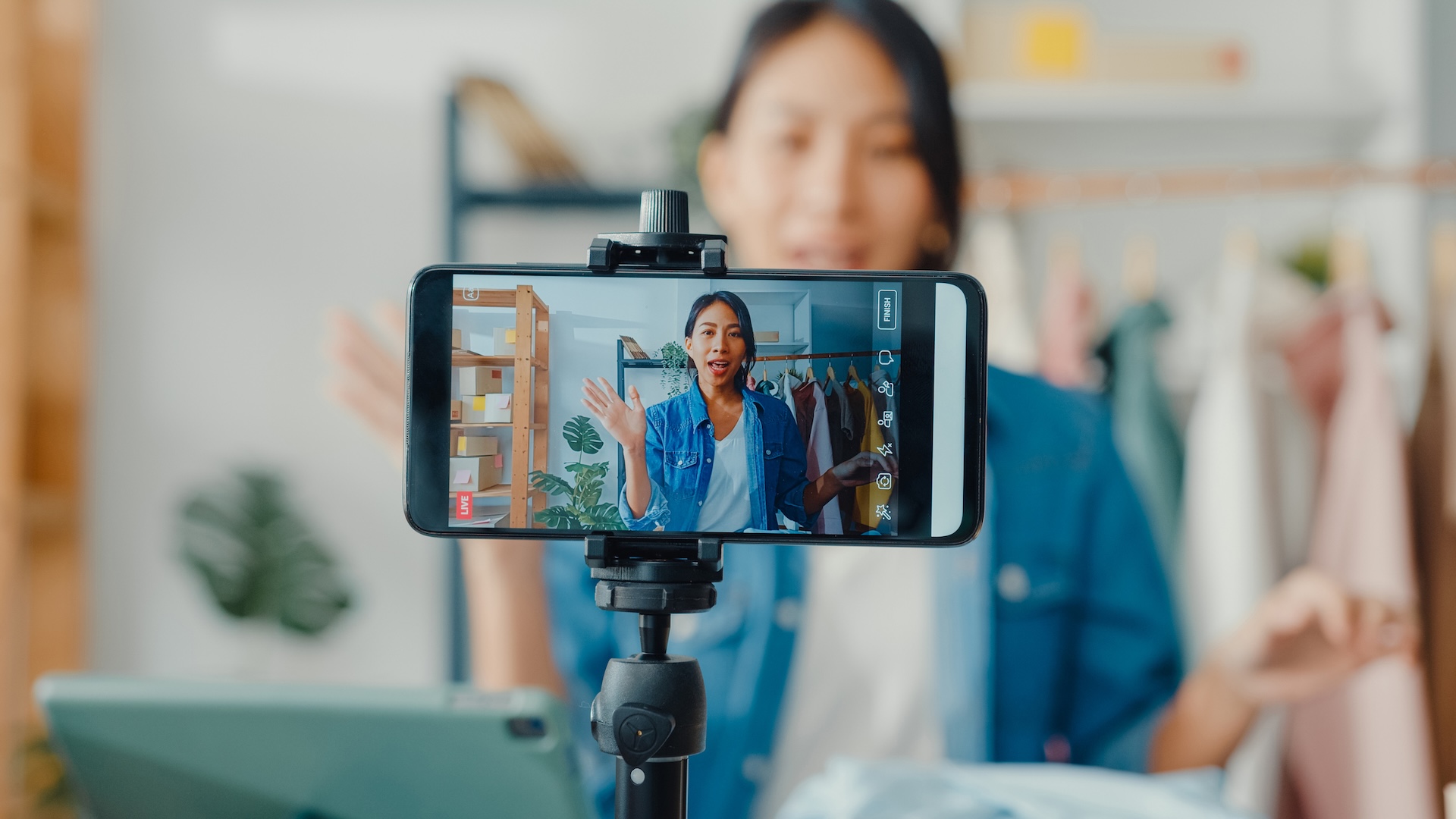
DIY video recording

Why This Works Over Time

The real power of this system comes from repetition.

Each month:

  • You record one new short video
  • You repurpose it into clips, a blog, and an email
  • You reshare content from previous months

By month three, four, or five, you’re no longer scrambling for ideas. You’re simply managing and redistributing content you already own.

Most audiences don’t see content the first time it’s posted anyway. Repetition builds familiarity, trust, and recognition.

Man working on laptop and recording video on smartphone

Read the Full Article on BuyingLocal.us

We recently laid out this system step by step in a newspaper-style article written for local business owners.

Read the full article on BuyingLocal.us: Five Minutes to 10× Your Marketing

The article breaks down:

  • How the system works month by month
  • How content compounds over time
  • Why recycling content is not only acceptable, but necessary
  • How small businesses can stay consistent without burning out

If marketing feels overwhelming—or if it keeps falling to the bottom of your priority list—this approach is a practical place to start.

Need Help Implementing This?

Understanding the system is one thing. Implementing it consistently is another.

Download the FREE checklist for implementation here: fivetowers.us/5-minute-marketing-checklist/

If you have questions or want help setting this up for your business, Michael Nelson and the team at Five Towers Media work with businesses to simplify marketing and turn everyday expertise into consistent, usable content.

Email: michael@fivetowers.us
Website: fivetowers.us

Sometimes a short conversation is all it takes to make marketing finally feel manageable again.

Recent News

See All News

Continue reading

SEO and winning the Google game

How to Win the Google Game: A Guide to Improving Your SEO and Online Presence

Are you looking to kick off 2025 with strategic focused efforts geared towards bringing in new business? Looking for the one magical thing you can do to increase brand awareness and bring potential clients your way? Tired of social media chewing up your budget without much ROI? Then focus on one thing: Winning the “Google Game.”

Winning the “Google Game” often seems like some sort of magical contest, where only a chosen few are able to rise to the top. The simple truth is that there is nothing magical about it — like any other game, it is a simple matter of understanding the rules and using them to your advantage.

Google’s Search Engine is in the business of matching up search queries with search results. It incorporates things like Bounce Rate, Load Speeds, and Backlinks to differentiate good search results from poor. The list of things Google takes into consideration is not short, and can be a bit technical — but there are a few straightforward steps any local business can take to start winning.

Read the full article on Buying Local.

Recent News

See All News

Continue reading

1 Change to Make to Your Marketing in 2024

When I talk to business owners about their marketing efforts, they always tell me they can sell to “anyone” and “everyone”… But for most companies, it’s financially impossible to market to “anyone” and “everyone.”

Here are the steps to redefining and refining, with some examples of how we’ve handled this ourselves here at Five Towers:

1. Take a second pass at demo, geo, and psychographic Info.

Our objective here is to narrow down these categories. For us, we started with a smaller geographic area; logistically, we can work with anyone anywhere, but the businesses we love to work with are located in Warren, Washington, and Saratoga Counties.

We also narrowed down our demographics, specifically with regard to industry types – we love to support blue collar businesses, manufacturers, and professional services (attorneys, CPA’s, financial services, etc). What we’ve found is that narrowing down our Geo and Demo also changed our Psychographics. Our target market does not want to worry about the hottest creative trends or staying up to date on best practices in a fast moving environment. In many cases, our Target Market has a Marketing Coordinator who needs the resources of a large team but does not have the budget for in-house employees.

2. Reach out to current clients…

…that fit this refined targeting data, and interview them to help refine Psychographic Data. This is also a great way to ask for a Google review or testimonial. You are looking to get their reason for loving the work you do and why they continue to work with you.

This will help with #1 above and also help you refine your messaging. If you do this for 5-7 clients, you will have some great data and can look for the overlap. If all of your clients say “it takes a ton of weight off their shoulders to be able to count on you and your team,” you should probably include similar messaging in your marketing efforts.

To learn more, click here to read the full article on Buying Local.

Recent News

See All News

Continue reading

Social Media Has Left the Building

One of the most common conversations I have with clients is about whether it makes sense to pay someone to handle their social media. It’s a fair question — and an increasingly difficult one to answer in social media’s favor. Here are my top three reasons why social media is no longer the marketing powerhouse it once was.

The Cost of Audience Development

Not long ago, businesses had it made. Building an audience on social media was as simple as creating a page and posting content. You could garner likes, shares, and followers with just a few clicks — and it was completely free. Every post seemed to gain a new follower, every offer attracted a new client. Until suddenly, it didn’t.

All at once, brands that used to get hundreds of likes dropped to three. Brands gaining dozens of new followers a day dropped to zero — unless they wanted to pay. What used to happen organically now has a price tag, and it rarely offers a sensible return. By some estimates, a new Facebook or Instagram follower costs between $2 and $4. The math isn’t difficult: at $2 per follower, gaining 10,000 followers costs $20,000. And that’s before you factor in the algorithm.

The Algorithm

The algorithm decides which posts are seen by thousands — and which are seen by no one. It’s spawned an entire industry of people who claim to understand it and promise to optimize your results. That promise is rarely kept.

By our estimates, organic posts are seen by less than 4% of your total audience. At $2 per follower and 10,000 followers, only 400 people would see any given post. Of those, how many will interact — let alone make a purchase?

Don’t take my word for it. Look at the engagement rate on a recent organic post from any major brand — add up the interactions and divide by their total followers. The result will be eye-opening. The algorithm has made organic reach nearly irrelevant for most businesses, and there’s no reliable way to outsmart it.

Social Fatigue

The social media companies will tell you fatigue is a myth because their overall user counts keep rising. What they don’t address is how many of those accounts are fake, duplicate, or simply inactive. They also don’t talk about how many real users have quietly stepped back.

Most people I speak to aren’t enthusiastic about social media anymore. They complain about the toxicity, the politics, the misinformation, and the noise. Over time, that frustration turns into disengagement — fewer posts, less interaction, and eventually, logging in less and less. The audience businesses paid to build is increasingly checked out.

The Bottom Line

Social media still has a role to play — just not the one it used to. Our current guidance is to use it as a communications and credibility channel rather than a primary marketing driver. It’s less about finding new customers and more about reinforcing trust with people who are already paying attention.

For most businesses, we recommend handling social media in-house and directing marketing budgets toward strategies with a more dependable return. If you’re still hoping for results like it’s 2016, social media has left the building.

Recent News

See All News

Continue reading

Stock Images and Video

A Case for Stock Video

As a content creator and videographer, I really want to tell you that your video inbound marketing efforts need only custom video creation. As a business owner, I definitely want to tell you that you need custom video creation.

The thing is, that is not always the case. On some occasions, stock video is the perfect solution — whether it’s for television, social media, YouTube, or your website. Let me lay out the pros and cons for you.

Pros

You can possibly save a ton of time.

In the video above, we had a limited amount of time to shoot, edit and deliver the product. Finding the right actors, choosing locations, scheduling and all the myriad details that go into producing footage can sometimes take weeks or months. By using stock footage, we were able to forgo all of that and get right to finding clips and editing. 

You can save a ton of money.

In the world of video, time equals money. If we had to shoot custom footage to line up with what we had for stock video clips, it would have cost thousands of dollars. When I say thousands, I mean closer to ten than two. 

You have many options.

There are so many clips available that you can cover almost every scenario imaginable. In some cases, you are able to find clips that you could not create without considerable time and cost. Stock video clips give you seemingly never-ending possibilities. Need a drone shot of Norway or footage like the one below but don’t want to expend resources to get one? No problem. Stock video is here. Don’t want to wait for a solar eclipse but want one in your video? Stock video is the answer. 

I am sure there are other points we can make for the use of stock video, but I think you get the gist. 

Cons

The stock video clips are not unique to your video.

Because everyone has access to them, there is a very good chance that you may see some of the clips in your repertoire in other people’s videos. 

You lose social engagement.

If you are using these videos for social media or television and you and your people are not in the video, you will possibly miss out on engagement. As people recognize you, they begin to comment, share and discuss. This is exactly what you want to help gain traction organically, especially with inbound marketing. Using stock video can drastically reduce this prospect and have a negative effect on your marketing efforts.

Sometimes there just are not stock videos clips that line up with your message the way you would want.

This is one of the times that stock video is limiting, and the only thing you can do is shoot custom video unique to your situation. 

As you can see, there are some reasons for and some reasons against using stock video clips. There are situations in which you will absolutely want to use stock video for your top-of-the-funnel marketing assets. This does not mean you should automatically go for stock videos that you just throw your logo on. There are also situations in which you will want to create custom videos perfectly suited to your needs—lead-generating machines that will give you an amazing ROI. Not sure when to use them and when not to? Shoot us an email, and we can help you figure it out.

Recent News

See All News

Continue reading

Podcast

Why Do I Need a Podcast?

I don’t want to spend too much time on the “how to.” There are plenty of resources out there that cover the mechanics of starting and publishing a podcast. What I want to focus on is the why — because that’s the conversation most people haven’t had yet.

Here are four reasons a podcast might be worth your time:

  1. It can position you as an expert and leader in your field.
  2. It’s a great top-of-funnel asset for inbound marketing.
  3. It gives you a natural opportunity to showcase your products and services.
  4. It can be a remarkably effective way to open doors for sales relationships.

Let’s take a quick look at each.

It Can Position You as an Expert

To be clear — I’m not advocating “fake it till you make it.” A podcast won’t position you as an expert if you aren’t one. What it will do is make sure people know you’re an expert when you already are one.

Right now, you may be highly skilled and well-respected within your existing network, but unknown to the broader market you’re trying to reach. A podcast is one of the most effective ways to move from unknown to known — introducing your perspective, your experience, and your value to an audience that hasn’t found you yet.

It Multiplies Your Content

A single podcast episode doesn’t produce just one piece of content. At a minimum, it gives you three: the audio itself, a written description or blog post for your website, and the video recording. All three can be used across social media, your website, and email campaigns. The video, when uploaded to YouTube with the right tags and description, can also contribute to your organic SEO and build a native audience on the platform.

That’s a meaningful return on a single recording session.

It Lets You Showcase What You Do — Organically

A podcast doesn’t need to be a commercial to serve your business. The key is weaving in references to your work naturally — defining your expertise through the conversation rather than stopping to pitch it. A brief intro or outro, 30 to 60 seconds, that speaks to what you do is completely acceptable. Listeners won’t be put off by it when the content is genuinely worth their time.

It Opens Doors Without Forcing Them

This is the most underrated benefit of a podcast, and it requires a little patience to execute well.

Say your target market is downtown retail businesses in your area. Rather than knocking on doors looking for sales conversations, you create a podcast that tells the story of your downtown — inviting city leaders, real estate professionals, and business owners as guests. You’re not selling anything. You’re creating something worth being part of, and in doing so, you’re meeting the exact people you’d eventually like to work with.

Done right, this builds relationships that lead to business on their own timeline. When the guests are ready to explore a partnership, they already know you, they’ve likely come to like you, and you’ve had the chance to establish trust. Don’t force the sales conversation — if you’ve put in the effort to make the show genuinely worthwhile, it will come.

Have questions about starting a podcast? We’d be glad to chat.

Recent News

See All News

Continue reading

DIY Video

DIY Video Shooter: Tips for Shooting Better Video on Your Phone

Cell phone cameras have come a long way. What used to require professional equipment can now be captured on a device that fits in your pocket — and for many businesses, shooting your own video content is a completely reasonable approach.

The difference between footage that looks good and footage that looks amateur usually comes down to a few basic mistakes that are easy to avoid once you know what they are.

Here are the most important things to keep in mind when shooting video on your phone.

Always:

  • Shoot horizontally. Hold your phone in landscape orientation for anything that will appear on a website, in an email, or in a standard video player. The exception is content made specifically for TikTok or Instagram Stories.
  • Shoot in 4K. Most modern smartphones support it — use it.
  • Shoot interviews at 24 FPS. This is the standard frame rate for cinematic-looking footage.
  • Shoot B-roll at 60 FPS. The higher frame rate gives you the option to use slow motion in post.
  • Upload directly from your device or SD card. Texting, emailing, or using AirDrop degrades both video and image quality. Upload to Google Drive or a similar service directly from the device.
  • Shoot interview subjects looking slightly off camera rather than directly into the lens.

Equipment and Setup:

Device. Use a recent model smartphone — anything from the last three to four years from Apple or Samsung will do the job well. Older devices, particularly anything pre-2019, may not have the camera quality needed for usable footage.

Tripod. Interview footage should be shot from a tripod whenever possible. Shaky interview footage is distracting and hard to edit around.

Stabilization. For B-roll, use a handheld stabilizer. They’re inexpensive and make a significant difference in the quality of moving shots.

Distance. Get closer to your subject than feels natural, especially for B-roll. Most DIY shooters stand too far back.

Aspect ratio. Use 16:9, not 4:3.

Shoot to edit. It’s easy to overshoot, which creates more work in post. Have a rough idea of what you need before you start rolling.

Audio:

Audio quality matters more than most people realize — arguably more than video quality for interview-style content. People will watch slightly shaky or imperfect footage, but poor audio is an instant click-away. Muffled sound, background hum, or inconsistent levels will undermine even the best visual content.

For interviews, a lapel mic connected to your phone is the best option. A shotgun mic works too, but a lapel keeps the subject’s voice consistent regardless of how they move. Shooting in a quiet environment is just as important as the equipment — sound pollution is hard to fix in post.

The Two Biggest Mistakes

Incorrect orientation and bad audio are by far the most common issues. If you remember nothing else, remember those two things. Shoot horizontal, and take your audio seriously.

Download our DIY Video Shooter Cheat Sheet for a quick reference you can keep handy on shoot day.

Recent News

See All News

Continue reading

Top-of-the-Funnel

4 Must-Have Videos for Filling the Top of Your Funnel

Most business owners, marketing managers, and salespeople are wrestling with at least one of three problems — and often all three at once.

The first is a thin sales pipeline. Traditional prospecting methods like cold calls and networking aren’t delivering the way they used to, and organic social media or paid ads aren’t converting the way they should. What they want are qualified buyers who are already somewhere in the buying process to find them — and to choose them.

The second is a hiring pipeline that’s just as thin. They need talent to grow, but the usual channels aren’t producing the right candidates. They want people to seek them out, not just respond to a job posting.

The third is differentiation. They’re competing on price because they haven’t found a compelling way to explain why someone should choose them over the competition. Their messaging sounds like everyone else’s, and their competitors have the reviews to match.

All three problems have something in common: they require a way to attract the right people, tell a compelling story, and communicate value before a conversation even begins. Video does all three — and these four types are the ones worth prioritizing first.

The Sales and Lead Generation Video

This is the most versatile video a business can have. It works as a prospecting tool, a digital leave-behind after a first meeting, a piece of website content, a social media asset, and a cross-selling tool for existing clients. A new team member can use it to understand your value proposition. A networking partner can share it on your behalf.

At its core, it’s a short video — typically one to two minutes — that explains not just what you do, but why a qualified buyer should choose you over the competition. Done well, it does more work than almost any other single piece of marketing content.

The About Story Video

Every business has a story, and most businesses aren’t telling it. Beyond the technical details of what you offer, there’s a human narrative — why the business exists, what the founders faced, what they’ve built and why it matters. That story creates connection in a way that a list of services never can.

Prospects who understand your story don’t just know what you do — they feel an affinity for it. That emotional connection influences buying decisions in ways that logic and pricing alone don’t. An about story video is one of the most effective ways to make that connection at scale.

The Hiring and Recruiting Video

The best candidates have options. They’re evaluating you just as much as you’re evaluating them, and a lot of that evaluation happens before they ever apply. A hiring video gives potential candidates a genuine look at your culture, your team, and what it’s actually like to work at your company.

Done authentically, this type of video doesn’t just fill open positions — it attracts people who are genuinely excited about what you’ve built and want to be part of it. That’s a fundamentally different candidate than the one who just responded to a job posting.

The Testimonial Video

Written reviews are valuable. But a real person, on camera, describing their experience in their own words carries a level of credibility that text simply can’t match. Testimonial videos go beyond star ratings and short comments — they tell a real story about who you help and what that help actually meant to them.

For a prospect who’s close to a decision but not quite there, a strong testimonial video can be the thing that tips the balance. It’s social proof in its most human form.

These four video types aren’t the only ones worth considering, but they’re the ones that tend to have the most immediate and measurable impact on the top of the funnel. If you’re not sure where to start, the sales and lead generation video is almost always the right first move — everything else builds from there.

Curious how video fits into your marketing strategy? We’d be happy to talk it through.

Recent News

See All News

Continue reading